
Why Your Business Needs Custom Software Design and Development Over Off-the-Shelf Tools
Discover why custom software design and development beats off-the-shelf tools. Learn how a custom software application development company can scale your business.
In the early stages of a business lifecycle, off-the-shelf software feels like a lifesaver. It is quick to set up, relatively inexpensive, and promises to solve your immediate problems with a few clicks. Whether it is a generic CRM, a basic project management tool, or a standard e-commerce template, these solutions provide a foundation. But as your company matures, those ready-made solutions often begin to feel like a suit that is two sizes too small. You find yourself changing your business processes to fit the software, rather than the software supporting your unique way of working.
If you are feeling the friction of limited features, rigid workflows, and clunky workarounds, it is time to consider the long-term ROI of custom software design and development. In this guide, we will break down why bespoke solutions are the secret weapon for scaling enterprises and how a specialized custom software application development company can help you reclaim your competitive edge.
The trap of one-size-fits-all software
Off-the-shelf software (SaaS) is designed for the average user. To appeal to the widest possible market, these platforms include a broad set of features many of which you will never use while often missing the one specific functionality that makes your business unique. This creates a feature bloat problem where your team is overwhelmed by menus they do not need, yet frustrated by the lack of a specific button or report they do need.
When you rely on generic tools, you face several primary risks that can stifle growth:
- Process distortion: Instead of the software serving your business, your business begins to serve the software. You end up working around the software’s limitations, creating manual workarounds in Excel, or hiring extra staff just to manage data entry between disconnected systems.
- Scalability walls: SaaS pricing often scales aggressively by user count or by feature tiers. As you grow, you may find yourself forced into paying for expensive enterprise tiers just to access one or two essential features. Over time, these subscription fees can far exceed the cost of a custom build.
- Lack of ownership and control: You do not own the code. If the provider decides to discontinue a feature you rely on, raises their prices substantially, or worse goes out of business, your entire operation is at their mercy. Custom software design and development produces an intellectual property asset that can live on your balance sheet.
- Security vulnerabilities: Popular off-the-shelf platforms are high-value targets for hackers. Because the underlying code is the same for thousands of businesses, a single vulnerability can expose everyone. Custom software provides security through obscurity and allows tailored, high-level security protocols specific to your data while mature teams still pair that with standards such as OWASP for secure design and testing.
Reality check: The low monthly fee of SaaS hides integration debt, seat creep, and the productivity tax of workflows that never quite fit until the bill and the exception handling become impossible to ignore.
Why custom software design and development is a strategic investment
Choosing custom software design and development is not just about building a tool; it is about building a digital asset that drives revenue and operational excellence. High-growth teams move when differentiation, compliance, or integration depth matters more than checking boxes on a vendor feature matrix. Here is why that shift pays off.
1. Seamless integration with existing workflows
Your business has its own secret sauce the specific workflows, data points, and customer touchpoints that make you successful. Custom software is built specifically to wrap around those processes. Whether you need to sync your inventory with a proprietary legacy CRM or automate a complex multi-step reporting cycle, custom builds ensure that your digital ecosystem is a unified whole rather than a collection of disconnected apps. This removes the data silo problem and allows for real-time business intelligence.
Growth-stage teams that need tailored digital experiences without template ceilings often start with our overview of Small Business Services shaped around your business logic rather than a generic theme.
2. Infinite scalability and flexibility
When you partner with a custom software application development company, you are building for the business you will be in five years, not just today. Custom platforms are designed with elasticity in mind. As your user base grows from hundreds to hundreds of thousands, or as your service offerings expand, your software can be updated and iterated upon without the need to migrate to an entirely new platform. You own the roadmap, meaning you can pivot your technology as quickly as you pivot your business strategy.
3. Enhanced security and compliance
For businesses in regulated industries (like FinTech, Healthcare, or Legal), off-the-shelf tools often fall short of strict security requirements. Custom software design and development allows you to implement encryption standards, multi-factor authentication, and data residency that meet SOC 2, HIPAA, or GDPR expectations with clearer control over where data lives and who can access it.
4. Long-term cost efficiency
While the upfront cost of custom development is higher than a monthly subscription, the long-term Total Cost of Ownership (TCO) is often significantly lower:
- Zero recurring licensing per seat: You are not paying per-user, per-month in the same way many SaaS products scale. As your team grows, cost does not automatically balloon on the same curve.
- Elimination of bloat: You are not paying for the eighty percent of a platform that you never open.
- Operational savings: Automating work that once lived in spreadsheets and email chains cuts labor cost, errors, and latency often the hidden line item that makes generic tools expensive in practice. When finance, sales, and operations stop rebuilding the same numbers in three places, leadership finally sees one version of the truth.
The modern tech stack for custom solutions
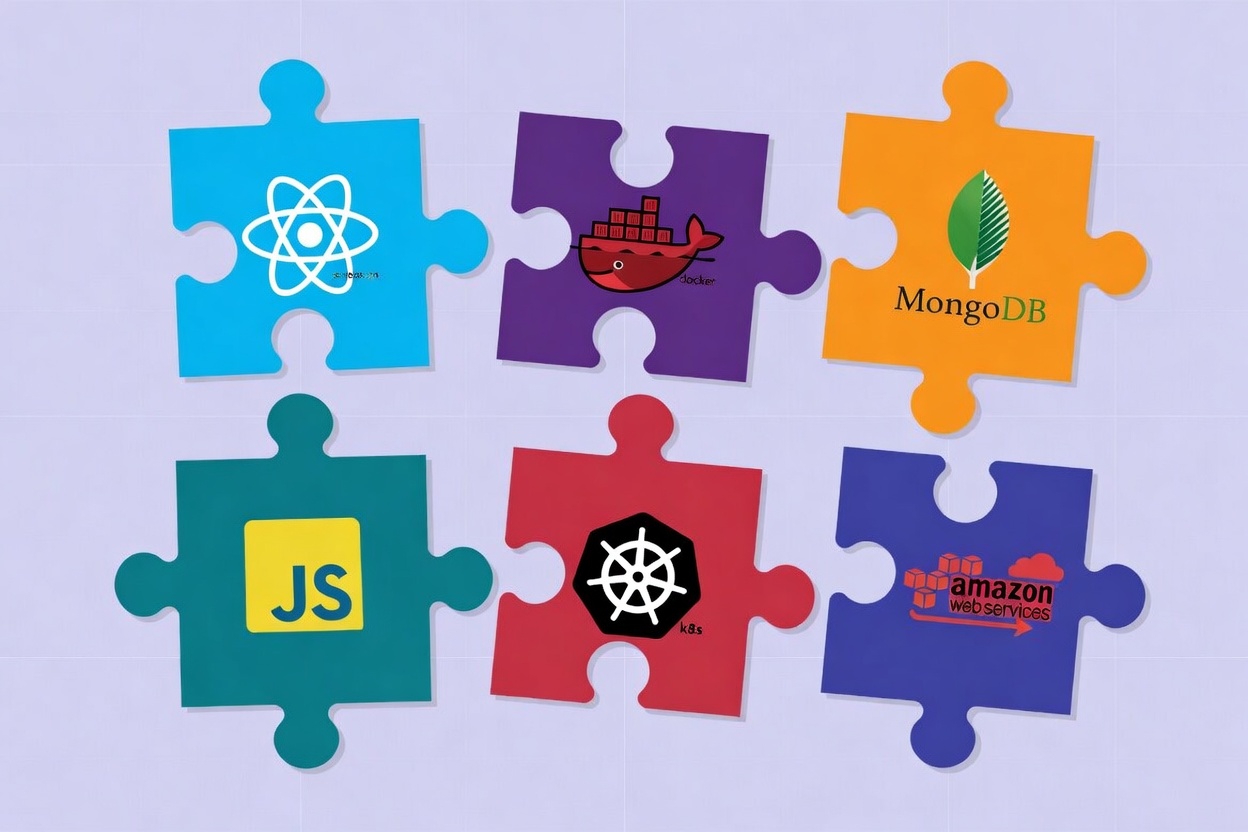
Custom work lets you pick a modern, high-performance tech stack instead of inheriting whatever a SaaS vendor optimized for their average tenant. At Nebustream, we emphasize speed, security, maintainability, and a runway that still looks sensible half a decade out not buzzword bingo.
Frontend: React or Vue.js for fast, responsive interfaces. Product experience ties directly to adoption see User Experience / User Interface Design.
Backend: Node.js, Python, or Go for authorization, integrations, and heavy processing.
Database: PostgreSQL for relational models; document stores when schemas evolve quickly.
Cloud: AWS, Azure, or Google Cloud for elastic capacity, uptime targets, and observability.
The custom software development lifecycle: from vision to launch
A professional custom software application development company follows a disciplined SDLC so delivery matches expectations.
Phase 1: Discovery and strategy
Listen first goals, personas, pain points then produce a product roadmap and MVP scope so later work has a single source of truth.
Phase 2: UX/UI design
Wireframes and high-fidelity prototypes let stakeholders click through flows before backend work hardens the wrong assumptions raising adoption odds before training budgets appear. This pairs with our Experience/User Interface practice.
Phase 3: Iterative development
Agile delivery in sprints (commonly two weeks) with demos each cycle see the Agile Alliance for widely shared principles. Short feedback loops limit scope drift.
Phase 4: Quality assurance and testing
From unit checks through integration to UAT on real devices and browsers confirm operations before end users absorb defects.
Phase 5: Deployment and integration
Migrate data where needed, deploy to your cloud, and train staff so day-one operations are predictable.
Post-launch: managed support and maintenance
Software is not a one-and-done project threats, browsers, compliance, and your roadmap all move after launch.
Managed support covers security patches, performance tuning as data grows, feature evolution without a vendor roadmap, and rapid fixes for production issues. Reference standards such as OWASP alongside your own policies for secure SDLC habits.
How to choose the right custom software application development company
A real partner acts as a strategic consultant, not an order-taker.
Ask: Do they understand my industry? Is communication transparent (owner of delivery, demo cadence, tools like Slack or Jira)? How do they approach security secure-by-design, threat modeling, SOC 2 or similar experience? Who owns the IP your source code and deliverables upon payment, aside from normal third-party licenses?
Outcomes-led partners ship software that still fits after year one in production and can explain tradeoffs in business language, not only ticket numbers.
Frequently asked questions
How much does custom software cost?
Complexity, integrations, compliance, and user counts drive price. Enterprise-grade work often starts mid five figures and rises. Against a $2,000/month SaaS stack plus seats and consultants, ROI commonly lands in 18–24 months when automation and revenue lift are real.
How long does development take?
Typical MVPs: 3–6 months. Larger rollouts: 9–12+ months for a full initial launch often sliced into releases consistent with Agile Alliance-style iteration.
Can custom software integrate with my current tools?
Yes custom APIs bridge accounting, HR, marketing stacks, and industry tools without forcing one vendor’s universal schema on every team.
Conclusion: build for the business you want to become
If you want to lead your industry, you cannot rely on the same generic tools as every competitor. Custom software design and development lets you innovate where others are restricted by a settings menu. You gain room for differentiated customer experiences, tighter operations, and product moves that SaaS roadmaps will never prioritize for your niche.
At Nebustream, we turn complex challenges into streamlined digital solutions from discovery and Experience/User Interface through cloud operations, Small Business Services, and enterprise programs.
Is your current software holding you back from your true potential? Get a custom quote from Nebustream today and let us build a solution that fits your business perfectly.